To improve conversion rates, first verify that you are counting the right conversion, then find the largest leak between the ad click and a qualified outcome. Compare targeting, ad-to-page message match, landing-page friction, the offer, and tracking before changing bids or budgets. Fix one major problem at a time, test the fix against business metrics such as cost per qualified lead, conversion value, or profit, and use conversion rate as supporting evidence rather than the only score. A reliable process is straightforward: define the conversion that matters, verify that it is recorded correctly, map each funnel step, identify the biggest meaningful drop-off, form one testable hypothesis, and protect the test from unrelated changes. That approach turns campaign data into decisions instead of a stream of guesses about headlines, audiences, and button colors.
1. Why are people clicking my ads but not converting?
A click-to-conversion gap usually comes from one of five places: the traffic is poorly qualified, the ad promise does not match the page, the page creates friction, the offer is not compelling enough, or tracking is missing real conversions. Check these areas in the order the data suggests; the first visible problem is not always the biggest one.
Start with traffic quality. Review search terms, audience segments, placements, locations, devices, and new versus returning visitors. A low cost per click can be a bad bargain if the visitors have little buying intent. Next, compare the wording and expectation created by the ad with what appears immediately on the landing page. Someone who clicks “Book a 15-minute consultation” and lands on a page led by a long product overview has been given a reason to hesitate.
Then inspect page engagement and conversion behavior. A high landing-page exit rate can point to slow loading, poor message match, accidental clicks, or a technical problem. If people reach the form but abandon it, the problem may be field count, unclear requirements, weak reassurance, or an offer that does not justify the effort. If the form submits but sales rejects most leads, your apparent conversion problem may actually be a qualification problem.
Finally, verify the measurement. Compare platform conversions with your analytics, CRM, payment system, or backend records. Look for duplicate events, missing browser or server events, incorrect thank-you-page triggers, consent-related gaps, and attribution differences. Do not optimize toward a number you cannot trust. A useful diagnosis sounds like “mobile visitors from one placement reach the form but rarely finish” or “the campaign reports leads that never enter the CRM,” not simply “conversion rate is low.”
2. What should I count as a conversion before I optimize anything?
Choose a primary conversion that represents meaningful business progress, then use smaller actions as supporting signals. For lead generation, a qualified form submission may be the right primary event; for ecommerce, it is usually a completed purchase with revenue or margin data. A page view, video play, button click, or form start can reveal interest, but those actions should not usually drive automated bidding when they have little connection to revenue.
Separate micro-conversions from revenue-driving actions in your reports. A visitor might download a guide, request pricing, book a meeting, and eventually become a customer. Assign each event a role: diagnostic, optimization, or business outcome. If the platform cannot receive qualified-lead or purchase data quickly enough, you may temporarily optimize for a closer proxy, but document the limitation and check that the proxy correlates with quality.
Before changing campaign settings, test the entire measurement path. Confirm that the tag or SDK fires once under the intended condition, that event names and values are correct, and that a purchase or lead reaches both the platform and your internal system. Check attribution windows, time zones, deduplication between browser and server events, consent settings, and cross-domain tracking if the conversion happens on another domain. Test common paths on mobile and desktop, including validation errors and payment failures.
Allow for reporting delay and attribution differences. An ad platform may credit a conversion that analytics assigns elsewhere, and CRM totals may change after duplicate leads or spam are removed. Keep a baseline period and record the definitions you are using. A perfectly measured low conversion rate is more useful than an impressive rate built from accidental button clicks.
3. Where is my funnel losing the most potential customers?
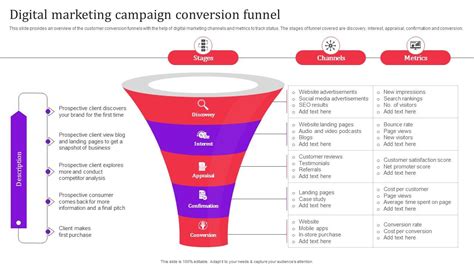
Review the funnel as a sequence of rates, not as one campaign-level conversion number. A simple path is impression, click, landing-page engagement, form start, form completion, qualified lead, and sale. Calculate the count and rate at each step for the same date range, audience, device, and campaign. The largest actionable loss is often where the next step falls sharply, but also consider the value of the people who remain.
Imagine a lead campaign with 100,000 impressions, 2,000 clicks, 1,200 engaged landing-page visits, 500 form starts, and 80 submissions. The 40% click-to-engaged-visit rate may suggest a page-load or message-match problem. The 500 starts to 80 submissions suggests a separate form or offer issue. If only 10 of those 80 leads are accepted by sales, the campaign also has a quality problem that a higher form-completion rate could make worse.
Break the funnel down by useful dimensions: brand and non-brand traffic, prospecting and remarketing, search terms, creative, location, device, browser, and landing-page version. A blended average can hide one strong segment and one broken segment. Watch the denominator too: a platform may define landing-page views differently from analytics, while a CRM may exclude duplicates that the ad platform counts.
Use behavior evidence to choose the next check. High clicks but few page views can indicate slow loading or a redirect issue. Plenty of page views but few form starts points toward the headline, offer, or call to action. Many starts but few submissions points toward form friction, validation, privacy concerns, or technical errors. Good submission volume but poor qualification points toward targeting, ad wording, or the questions used to qualify people. This map tells you where to investigate before you touch campaign settings.
4. Is my targeting bringing the right people or just cheap traffic?
Judge targeting by downstream quality, not by cheap clicks. Start with intent. Search terms that contain a specific problem, product category, location, or buying action often deserve different treatment from broad informational searches. In paid social or display, inspect audience source, placement, context, frequency, and the behavior of people who see the ad repeatedly. Low-cost inventory can produce attractive traffic numbers while contributing little qualified demand.
Review search terms and placements regularly, then add exclusions based on evidence. Remove irrelevant queries, unsuitable apps or sites, existing customers from prospecting campaigns when appropriate, out-of-area users, and audiences that repeatedly produce unqualified leads. Be careful with exclusions that are too broad; they can remove people who need education before buying. Use negative keywords, placement controls, location options, audience exclusions, and schedule adjustments where the data supports them.
Compare geography, device, operating system, browser, and hour of day using qualified conversion rate and cost per qualified conversion. A mobile segment with a lower raw conversion rate may still be profitable if its leads have high value, while a desktop segment with cheap conversions may produce poor sales outcomes. Make sure location reporting reflects the people you actually want, not merely people showing interest in a location.
Avoid optimizing for cost per click in isolation. A higher bid or narrower audience can raise click costs while improving intent. Conversely, a cheap audience can inflate volume without producing customers. Give each segment enough data to avoid reacting to a handful of conversions, then shift budget gradually toward segments that deliver the right action at an acceptable cost. If tracking cannot distinguish qualified outcomes, fix that limitation before making aggressive targeting changes.
5. Does the ad make the right promise for the page people land on?
A strong ad and a strong landing page can still fail as a pair if they tell different stories. Message match means the audience, problem, benefit, offer, and next action remain recognizable from the ad through the page. The visitor should not have to translate a new promise after clicking.
Say an ad says, “Get a free audit of your local SEO visibility—see three missed opportunities.” The page should repeat that offer near the top, explain what the audit includes, identify who it is for, and make the request form the obvious next step. A mismatched version might send the visitor to a generic agency homepage with a headline about full-service digital marketing and a call to “Learn more.” The click was earned by specificity, but the page asks for patience and interpretation.
Align the main headline, supporting copy, visual, proof, and call to action. Reflect the pain point used in the ad, but do not copy keyword phrases mechanically if they make the page awkward. Make the next step proportionate to the promise: an ad offering a checklist should not immediately demand a sales call, while an ad for a consultation should explain the consultation clearly.
Create variations for meaningful audience differences rather than forcing every visitor through one generic page. A new prospect may need proof and education; a returning visitor may need pricing, implementation details, or a direct checkout. Keep the ad honest. Exaggerated claims can improve the initial click rate while increasing abandonment, complaints, refunds, and low-quality leads. The goal is to attract people who recognize a relevant problem and feel confident that the page offers a credible next step.
6. What landing-page changes usually lift conversion rates first?
Start with changes that remove uncertainty and effort. Put a clear value proposition near the top: what the visitor gets, who it is for, and why it is worth acting now. Show relevant proof close to the claim, such as customer results, recognizable client types, reviews, ratings, certifications, or a clear explanation of how the product works. Proof should support the specific audience and promise rather than appear as decoration.
Give the page one primary action. Extra navigation, competing offers, and several calls to action can pull attention away from the conversion you are paying to generate. Keep the form as short as the sales process allows. Every field should earn its place by improving qualification, routing, personalization, or follow-up. If sales needs more information, consider collecting it later or testing a shorter first step rather than assuming every question belongs on the initial form.
Improve speed and mobile usability. Check the first visible content, tap targets, form behavior, keyboard types, error messages, cookie banners, and checkout flow on common devices. A page that works on a large monitor can be frustrating on a phone. Make errors specific and preserve entered information so a visitor does not have to start again.
Address practical concerns near the action. Explain price or pricing expectations, delivery timing, cancellation terms, data use, privacy, payment security, and what happens after submission. The right reassurance depends on the offer. Do not add badges, testimonials, or urgency claims that are irrelevant or unsupported. Fix obvious technical and clarity issues first, then test a focused change so you can learn what actually helped.
7. How do I improve the offer instead of endlessly tweaking button colors?
Conversion rate often reflects the strength of the exchange: what the visitor gives up in money, time, information, or risk compared with what they expect to receive. If the offer feels vague or expensive for the level of trust available, cosmetic changes will have limited impact. Clarify the outcome, scope, time to value, and reason this next step is worth taking now.
Depending on the business, useful tests may include a free trial, a guided demo, a sample, a transparent starting price, a guarantee, a relevant incentive, or a consultation with a clear agenda. A software trial needs a quick route to first value; a service consultation needs credible expertise and a clear follow-up; an ecommerce offer may benefit from shipping clarity or a bundle rather than a blanket discount. Use urgency only when it reflects a real deadline, limited availability, or changing terms.
Social proof can reduce perceived risk, but specificity matters. A detailed customer example from a similar company may help more than a large collection of vague praise. Explain what happens after a form submission or purchase so the visitor can picture the process.
Watch the quality and economics of the conversion. A lower-friction offer can raise conversion rate while attracting people who never intended to buy, increasing sales workload, refunds, churn, or support costs. Track qualified rate, revenue per conversion, close rate, gross margin, and lifetime value where available. Sometimes the best move is to make the offer more selective or add a useful qualification question. More conversions are not automatically better conversions.
8. Which campaign settings should I change, and which should I leave alone?
Change campaign settings when the evidence points to a delivery or allocation problem; do not use them as a substitute for fixing a weak journey. Adjust bids, budgets, placements, locations, schedules, or audience exclusions when a segment consistently differs in qualified conversion rate, value, or cost and has enough volume to support a decision. Raise budget when a campaign is meeting its efficiency target and has room to spend, not simply because it receives clicks.
Objectives and automated bidding depend on the conversion signal. If the platform is optimizing for page views or low-value form starts, changing bid strategy may not solve the underlying issue. First provide a reliable primary conversion, enough recent signal, and sensible values where possible. Automated systems also need room to learn; frequent edits to budget, targeting, creative, and event definitions can restart or disturb that process.
Control placements and frequency when exposure is clearly wasteful or audience fatigue is visible. Refresh creative when frequency rises and response or qualified conversion quality falls, but do not replace ads solely because a short-term click-through rate moved. Consider creative rotation, exclusions, and audience expansion only with a defined reason.
Change one major variable at a time when you are trying to learn. A simultaneous bid increase, new audience, landing-page redesign, and offer discount may improve results, but you will not know why—and the improvement may disappear when the discount ends. Keep a change log with the date, hypothesis, affected segment, expected effect, and guardrails. If tracking is uncertain, leave automated bidding and major budget changes alone until measurement is repaired.
9. How can I test changes without fooling myself with noisy data?
A useful test begins with one hypothesis and one primary success metric. For example: “Replacing the generic headline with the specific audit promise will increase qualified form submissions from non-brand search traffic without raising cost per qualified lead.” Decide in advance what counts as success, what would make you stop, and which metric protects the business.
Use a suitable sample rather than a fixed number that sounds authoritative. The required volume depends on your baseline conversion rate, the smallest improvement worth acting on, traffic variability, and the number of comparisons being made. Low-volume campaigns may need a longer test, a larger audience, or a less granular decision. If you cannot reach useful volume, treat the result as directional evidence rather than proof.
Split traffic fairly and keep the test conditions stable. A landing-page experiment can use randomized variants; an ad test should avoid letting one version run only on unusually strong days. Keep the audience, budget, attribution settings, and conversion definition consistent. Do not stop the test after an early spike, and do not keep extending it until a preferred result appears. Account for reporting lag and seasonal or promotional effects.
Read conversion rate alongside cost per conversion, cost per qualified lead, conversion value, revenue per click, profit, close rate, refund rate, or lead-to-sale rate as appropriate. Use statistical confidence or an equivalent uncertainty measure to describe how much the data supports a difference, but do not treat a threshold as the business decision by itself. A small, statistically uncertain improvement may be commercially attractive if the downside is limited; a statistically clear lift may still be unprofitable if it lowers lead quality.
For each test, record the control and variant, audience, dates, spend, conversions, qualified outcomes, conversion value, and any reporting delay. Compare like with like and check whether the result holds across important segments rather than relying only on the blended account total. When the result is inconclusive, keep the learning: it may mean the change was too small, the sample was insufficient, or the diagnosed leak was not the main constraint.
10. What should I do in the next 30 days to raise conversion rates?
Use the first week to establish trustworthy measurement. Write down the primary conversion, micro-conversions, qualification rules, attribution windows, and value definitions. Test tags and events across devices, confirm deduplication and consent behavior, and reconcile platform data with analytics, CRM, or payment records. Pause major optimization changes if the system is counting the wrong action.
In the second week, map the funnel by campaign, audience, device, location, creative, and landing page. Identify the largest meaningful drop-off and distinguish quantity from quality. Make quick fixes with clear upside: remove irrelevant search terms or placements, repair broken forms, improve the headline-to-page match, reduce unnecessary fields, clarify the offer, and address obvious speed or mobile problems.
In the third week, run one controlled test against a defined hypothesis. Choose a change close to the diagnosed leak, such as a more specific landing-page promise, a shorter form, or a better-qualified offer. Set the primary metric and guardrails before launch. Keep unrelated campaign settings stable and record every material change.
Review weekly, allowing for conversion delay. Track impressions, clicks, click-through rate, landing-page engagement, form starts, conversion rate, cost per conversion, qualified rate, cost per qualified lead, conversion value, revenue, and profit or margin where available. Scale gradually when efficiency and quality remain within target. Refine when the signal is promising but inconsistent. Stop or rebuild when the campaign repeatedly fails its business guardrails. Ignore isolated daily swings, vanity metrics, and cosmetic changes that do not address the largest leak.
Use a simple priority score for the next round of work: size of the affected audience, severity of the drop-off, likely business impact, confidence in the diagnosis, and effort to fix it. A broken form with high traffic usually outranks a small headline preference test. This keeps the team from spending a week polishing a low-volume page while a major qualification or tracking problem remains.

Conclusion
Start with measurement, not a new bid strategy. Confirm that the conversion in your account is the action your business actually values, then locate the biggest loss between click and qualified outcome. Fix the clearest friction or mismatch, and run one controlled test with a business guardrail such as cost per qualified lead, revenue, or profit. Leave secondary settings alone while you learn. A good result is not simply a higher conversion rate; it is a repeatable improvement in valuable outcomes at an acceptable cost, with enough evidence to justify the next budget decision. If you can explain which segment improved, why it improved, and whether the improvement survives beyond a few noisy days, your optimization process is working.
Frequently Asked Questions
What is the fastest way to improve a low conversion rate?
First check for broken tracking, slow pages, form errors, and a clear mismatch between the ad and landing page. Those problems can suppress results immediately. After that, prioritize the largest measured funnel drop-off rather than making several cosmetic changes at once.
Should I optimize for clicks or conversions?
Optimize for a meaningful conversion once it is tracked reliably and occurs often enough to guide delivery. Clicks can help diagnose traffic and creative, but they do not prove intent or business value. If your primary conversion is too rare, use a closer proxy temporarily, document the limitation, and compare that proxy with qualified outcomes.
How long should I run a performance marketing test?
Run it long enough to capture a useful volume of conversions and normal variation, while allowing for reporting delay. The exact period depends on traffic, baseline conversion rate, seasonality, and the size of improvement you care about. Set the duration or stopping rules before seeing the results so you do not stop on an early fluctuation.
Why did my conversion rate rise while sales got worse?
The campaign may be attracting lower-intent visitors, counting a weaker micro-conversion, or using an offer that encourages low-quality leads. Check qualified rate, close rate, revenue per conversion, refunds, and profit alongside the platform conversion rate. A higher number of recorded actions is not a win if the actions have less business value.